
Many business owners start with a WordPress theme or page builder because it is faster and less expensive upfront. The site looks professional at launch. Then, as the business grows, limitations appear: the design starts to feel generic, pages load more slowly than expected, certain features require workarounds, or updates create unexpected issues.
Custom WordPress development means building the site (or key parts of it) specifically for your needs rather than starting from a pre-made template. It usually costs more at the beginning. The question is whether that higher investment creates enough long-term value for your particular situation.
What Custom WordPress Development Actually Means
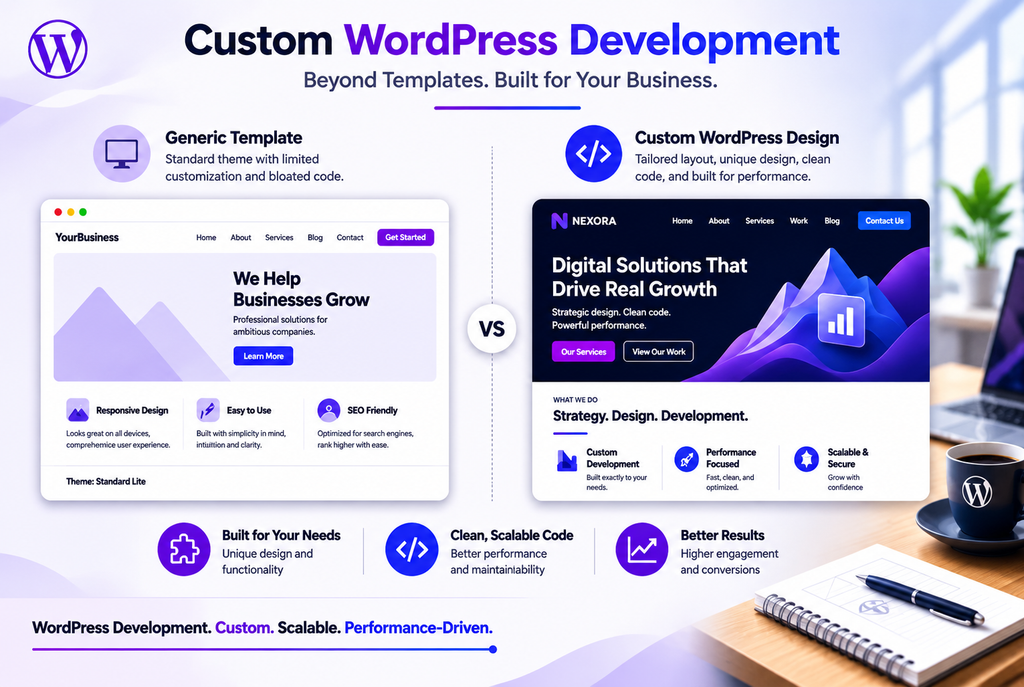
Custom development can range from a fully hand-coded theme to a tailored setup that uses custom fields, specific functionality, and only the plugins you actually need. It is not the same as simply customizing a theme’s colors and fonts.
The main differences from a standard theme or page-builder site usually include:
- Cleaner code with less unused features
- Design and layout built around your brand and content structure
- Functionality shaped to how your business actually works
- Greater control over performance and technical SEO
- Fewer plugin dependencies in many cases
You still use WordPress as the content management system, so non-technical team members can update pages and posts. The difference is in how the site is built underneath.
When Custom Development Is Usually Worth It
Custom WordPress development tends to make more sense when one or more of these apply:
Your site needs to do something specific.
Standard themes and builders handle typical brochure pages, blogs, and basic contact forms well. They become less ideal when you need custom booking logic, unique membership areas, complex product configurations, or integrations with other business systems.
Performance and technical SEO matter to your results.
A leaner custom build can make it easier to achieve strong Core Web Vitals and clean technical SEO foundations. Themes and page builders often include extra code and scripts that are not required for your particular site. This does not mean every custom site is automatically fast, but the starting point is usually cleaner.
You want a design that is clearly yours.
Many popular themes are used by thousands of other sites. A custom design helps your business look distinct rather than like a variation of a common template.
You expect the site to grow.
If you anticipate adding services, expanding into e-commerce, or needing more structured content over the next few years, a custom foundation is often easier to extend without a full rebuild.
The site is important to revenue.
When the website generates leads or sales, the cost of slow performance, limited flexibility, or frequent technical issues becomes easier to justify fixing at the source.
When a Theme or Page Builder Is Often Enough
Not every business needs custom development. A well-chosen premium theme or a carefully built page-builder site (using Elementor, Divi, or similar) can be the practical choice when:
- The budget and timeline are limited
- Requirements are standard (service pages, blog, contact forms)
- The site is expected to stay relatively simple
- You need to launch quickly to test an idea or establish a basic presence
In these cases, the lower upfront cost and faster timeline usually outweigh the long-term advantages of a custom build.
Cost and Long-Term Value
Custom WordPress development projects for business sites commonly start in the several-thousand-dollar range and can move into five figures depending on complexity, design depth, and custom functionality. Theme-based or page-builder projects are typically lower to start.
The longer-term picture is less straightforward. Custom sites often have lower ongoing plugin and license costs and can be more predictable to maintain. Theme or builder sites may need more frequent troubleshooting as plugins and the builder itself update. Some businesses eventually rebuild a template site once limitations become clear, which adds another project cost.
The break-even point varies. For many growing businesses, the higher initial investment in custom development is recovered through better performance, fewer workarounds, and reduced need for a full rebuild later. For simpler sites, the theme route remains more cost-effective.
How to Decide
Ask these practical questions:
- What does the site need to do that a standard theme cannot handle cleanly?
- How important is page speed and technical SEO to your traffic and conversions?
- Will non-technical people need to edit content, and how structured should that editing experience be?
- Do you expect the site to grow significantly in the next two to three years?
- What is the cost of living with limitations versus investing more upfront?
At Nexryvo we build custom WordPress websites for businesses that want modern design, solid performance, and room to grow. Our work includes custom design, Elementor and other builder implementations when they fit, WooCommerce development, and ongoing maintenance. We also help with website redesigns when an existing theme or builder site has reached its limits.
Conclusion
Custom WordPress development is worth the investment when your business needs more than a standard template can provide cleanly—whether that is unique functionality, stronger performance foundations, a distinctive design, or a site built to scale. For simpler needs and tighter budgets, a quality theme or page-builder site is often the better starting point.
The right choice depends on your specific requirements, timeline, and how central the website is to your business goals. Matching the build approach to those realities usually produces better results than choosing solely on the lowest initial price.