
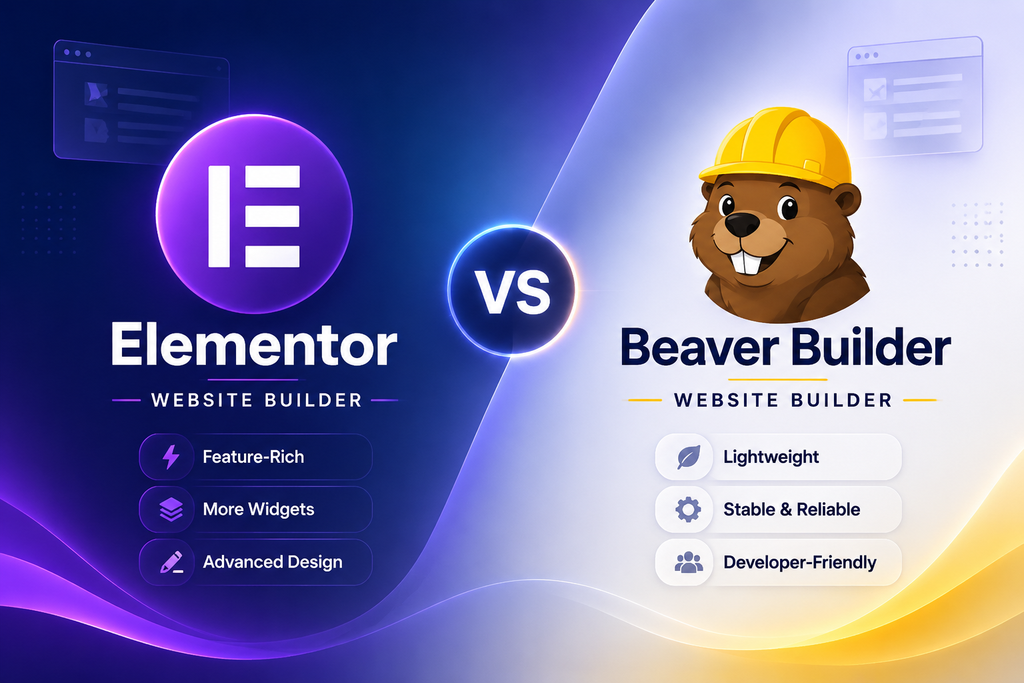
Choosing between Elementor and Beaver Builder is one of those decisions that can quietly shape how easy (or frustrating) your WordPress site will be to build and maintain. Both are solid page builders. Both let you design pages visually without coding. But they feel different once you start using them day to day.
If you’re a small business owner, startup founder, or someone redesigning an existing site, the right choice depends less on which one has more features and more on how you actually work and what you value most.
A Quick Look at Both
Elementor is the more popular option right now. It has a strong free version, a huge library of widgets and templates, and a Pro plan that includes a theme builder, popup tools, and more advanced design controls. A lot of people like it because it feels modern and flexible.
Beaver Builder has been around longer and built a reputation for stability and cleaner code. It’s less flashy. The free version is quite limited, so most people who use it seriously pay for a plan. Agencies and developers often prefer it because the output tends to be lighter and the editing experience stays predictable.
Features and Design Flexibility
Elementor gives you more out of the box. You get a wide range of widgets, hundreds of ready-made templates and blocks, motion effects, global colors and fonts, and a full theme builder included with Pro. If you enjoy fine-tuning layouts, experimenting with design, or using third-party add-ons, Elementor makes that easy.
Beaver Builder keeps things simpler. The module library is smaller, and advanced theme-building features usually require an extra add-on called Beaver Themer. The interface feels cleaner and less crowded. Some people find this refreshing. Others feel limited once they want more visual polish or complex layouts.
If your site needs to look distinctive or you plan to create a lot of varied page designs, Elementor usually wins. If you prefer a focused set of tools that cover the essentials without extra noise, Beaver Builder can feel more efficient.
Ease of Use
Both are approachable for non-developers. Elementor’s interface is highly visual. You can right-click elements, edit text inline, and see changes instantly. There’s a large amount of tutorials and community support, which helps when you get stuck.
Beaver Builder is also straightforward. Many users say the learning curve feels gentle, especially if you prefer a less busy workspace. Some agencies like handing client sites over in Beaver Builder because the editing experience stays consistent and simple.
Neither requires coding knowledge for normal use. Both support custom CSS when you need more control.
Performance and Code Quality
This is where the difference becomes practical.
Beaver Builder generally produces cleaner, lighter markup. Independent tests often show better mobile performance scores and fewer nested elements. For sites where speed matters (and it usually does for SEO and user experience), this is a real advantage.
Elementor sites can still load quickly, but they tend to be heavier by default. You need good hosting, careful widget choices, image optimization, and caching to keep things fast. It’s doable, just more work.
If performance and long-term maintainability rank high on your list, Beaver Builder has the edge. If you care more about design flexibility and are willing to optimize carefully, Elementor remains a strong option.
Pricing Reality
Elementor’s free version is usable for basic sites. The Pro plans start lower for a single site (around the $59–$60 range per year) and scale based on how many sites you need. Higher tiers unlock more features and higher site limits.
Beaver Builder’s free version is limited. Paid plans start higher (often around $99 per year) but usually include unlimited sites. Higher plans add the official theme, multisite support, and white-label options. Theme-building power often costs extra.
For one business website, Elementor Pro is frequently the more affordable starting point. For agencies or freelancers managing multiple client sites, Beaver Builder’s unlimited licensing can make more sense over time.
So Which One Should You Pick?
Choose Elementor if you want:
- More design options, templates, and third-party support
- Advanced tools like a built-in theme builder and motion effects
- A capable free version to test the waters
- A tool that works well for marketing pages, service sites, and visually rich designs
Choose Beaver Builder if you want:
- Cleaner code and generally stronger performance
- White-label options and agency-friendly licensing
- A stable tool that stays predictable over years of updates
- Unlimited sites without jumping to the most expensive plan
Most small business owners and startups end up happy with Elementor because it balances power and accessibility well. Agencies that maintain many sites and care about code quality and client handoff often stick with Beaver Builder.
A Practical Note from Real Projects
When we build sites at Nexryvo, we work with Elementor on a regular basis. It lets us create clean, modern layouts that clients can update themselves after launch without calling a developer for every small change. That practical flexibility matters for most business owners.
At the same time, we always look at the full picture — performance goals, how the site will be maintained, and whether the builder supports the long-term needs of the business. The tool should serve the website, not the other way around.
If you’re still unsure, start by listing what matters most to you: design control, site speed, ease of updates, number of sites you’ll manage, or budget. That short list usually points clearly toward one builder over the other.
Both Elementor and Beaver Builder can produce professional results. The better choice is simply the one that matches how you (or your team) will actually use the site after it launches.