
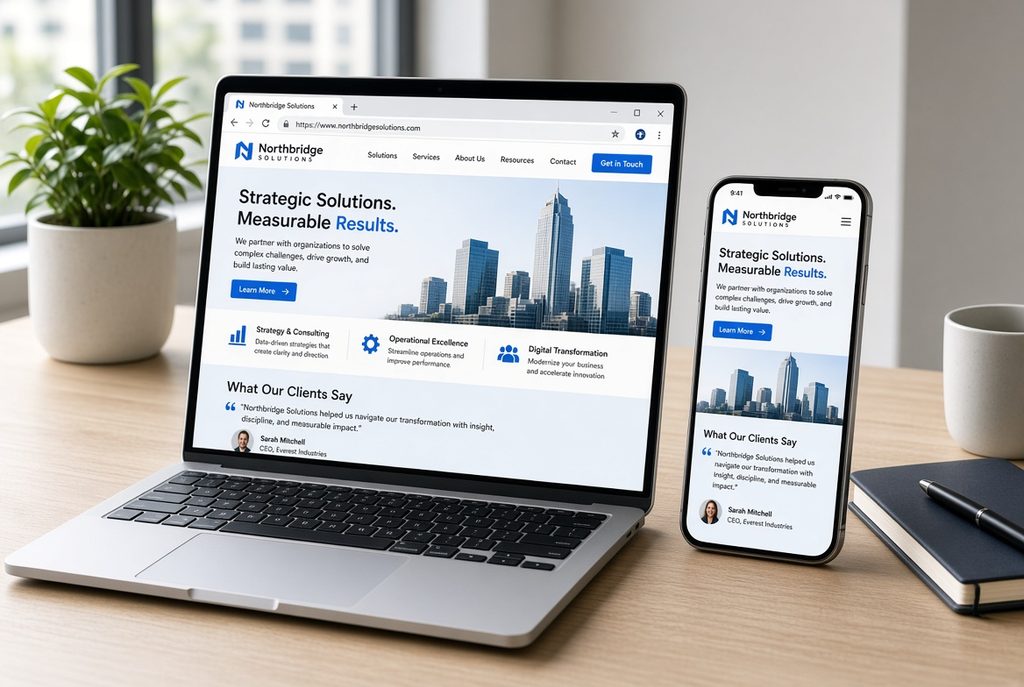
Visitors form an opinion about your business within seconds of landing on your website. Before they read a single sentence or click a button, they are already deciding whether your company looks credible, capable, and worth their time.
That first impression is driven largely by design. A clean, consistent, and well-structured site signals that you pay attention to details. A cluttered, slow, or outdated one quietly raises doubts—even if the service you offer is excellent.
Professional website design is not about flashy effects or trendy animations. It is about creating clarity, consistency, and confidence. Here are the practical elements that consistently make a website feel professional and trustworthy.
Clean Layout and Visual Hierarchy
A professional site guides the eye without forcing the visitor to work.
The most important information stands out first. Sections have breathing room instead of feeling packed. Alignment and spacing stay consistent from page to page. Fonts and colors are limited so nothing competes for attention.
Crowded pages with competing elements make a business look disorganized. Clean spacing and a logical flow make it look intentional and confident.
Consistent Branding Across Every Page
Consistency is one of the strongest trust signals in professional website design.
Your logo, color palette, typography, button styles, and overall tone should feel the same on the homepage, service pages, about page, and contact page. When these elements shift from page to page, visitors subconsciously question how carefully the business is run.
A restrained color palette—usually two or three primary colors—and two complementary fonts create a polished, cohesive look that feels intentional rather than improvised.
High-Quality, Relevant Imagery
Blurry, pixelated, or generic stock photos quickly undermine credibility.
Professional sites use sharp, high-resolution images that look good on both desktop and mobile. The photos feel relevant to the actual business rather than overly staged stock shots. Visual style stays consistent across team photos, project images, and product shots.
Real photos of your team, workspace, or completed work often build more trust than generic images of smiling people in offices.
Simple, Intuitive Navigation
Visitors should never have to guess where to find information.
A professional website keeps primary navigation limited and clearly labeled. Important pages such as Services, About, and Contact are easy to locate. Menus work smoothly on both desktop and mobile, and the structure reflects how real customers think about their needs rather than internal company organization.
Confusing or overly complex navigation makes a site feel unfinished and less trustworthy.
Mobile Responsiveness and Fast Loading Speed
Most visitors will view your site on a phone. A professional website must look and work well on every screen size.
Equally important is speed. Slow pages create frustration and signal that the site is not well maintained. Optimizing images, minimizing unnecessary scripts, and ensuring solid performance all contribute to a polished, professional experience.
Clear Messaging and Readable Typography
Professional design supports clear communication.
Headlines should quickly explain what the business does and who it helps. Body text should be easy to scan, with short paragraphs and readable font sizes. Strong contrast between text and background improves both usability and perceived quality.
Vague or overly complicated language weakens trust. Specific, straightforward messaging strengthens it.
Visible Trust Signals
Design alone is not enough. Visitors also look for proof that the business is real and reliable.
Effective trust signals include clear contact information, real customer testimonials with names, client logos or project examples, HTTPS security, a privacy policy, and an About page that introduces real people behind the business.
These elements reassure visitors that they are dealing with a legitimate company that can be reached if needed.
Technical Foundations That Support Trust
Several technical details quietly reinforce professionalism: a secure HTTPS connection, forms that actually work, no broken links or missing images, consistent styling of buttons and interactive elements, and basic accessibility considerations such as good contrast and readable text sizes.
When these basics are handled well, visitors rarely notice them. When they are missing, the site feels unfinished.
Putting It All Together
Professional website design is the combination of visual clarity, consistent branding, useful structure, strong performance, and visible proof that the business is real. None of these elements works in isolation. A beautiful layout with slow load times or missing contact details still feels incomplete. Strong messaging on a cluttered, inconsistent design still feels untrustworthy.
The most effective sites treat design as a tool for building confidence rather than decoration.
Looking to create a professional website that builds trust with your visitors? Nexryvo helps businesses design and develop modern, responsive, and performance-focused WordPress websites with clear structure and strong credibility. Get in touch with our team to discuss your project.