
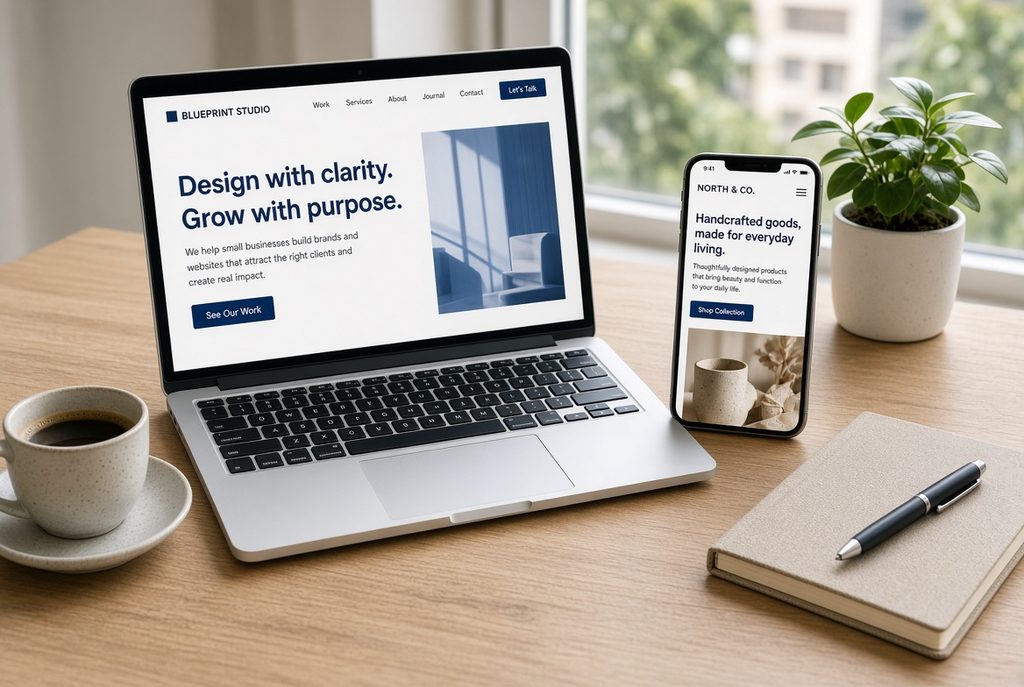
Website design trends come and go, but the ones that actually help small businesses are the ones that improve clarity, speed, trust, and usability. In 2026, the strongest approaches are less about flashy effects and more about making sites easier to use, faster to load, and more credible.
Here are ten practical website design trends that small businesses can realistically apply—without needing a massive budget or complex technology.
1. Speed-First Minimalism
Clean design is no longer just an aesthetic choice. It is a performance strategy.
Fewer elements, optimized images, and simplified layouts help pages load faster. Visitors notice when a site feels quick and focused. For most small businesses, removing unnecessary animations, large unoptimized images, and cluttered sections delivers better results than adding more visual effects.
2. True Mobile-First Design
Most visitors will experience your site on a phone first. Designing for mobile is no longer optional.
This means larger touch targets, simplified navigation, readable text without zooming, and content prioritized for smaller screens. Bottom navigation or sticky call-to-action buttons are becoming more common because they match how people actually hold and use their phones.
3. Accessibility as a Standard
Accessible design is moving from “nice to have” to expected practice.
Good contrast, clear heading structure, readable font sizes, keyboard-friendly navigation, and proper alt text help more people use your site—and often improve overall usability for everyone. Treating accessibility as a core design requirement rather than an afterthought is one of the smarter long-term decisions a small business can make.
4. Bold, Confident Typography
Typography continues to carry more visual weight.
Larger, well-chosen headlines, strong hierarchy, and restrained font pairings help sites feel modern and intentional. The goal is clarity and personality, not decoration. Many professional sites now rely on one distinctive display font for headlines and a highly readable sans-serif for body text.
5. Authentic Imagery Over Generic Stock
Visitors can spot staged stock photos quickly.
Real photos of your team, workspace, products, or completed work build more trust than generic images of smiling people in offices. When original photography is limited, thoughtfully chosen, high-quality images that feel relevant still outperform obvious stock. Consistency in visual style across the site matters more than perfect production value.
6. Subtle Micro-Interactions
Small interactive details—hover states, button feedback, gentle transitions—add polish without slowing the site down.
These micro-interactions provide useful feedback and make the experience feel more refined. The key in 2026 is restraint: motion should support the user, not distract from the message or hurt performance.
7. Clear Trust Signals Built Into the Design
Professional design alone is not enough. Visitors look for proof that a business is real and reliable.
Visible contact information, real testimonials with names, clear service descriptions, HTTPS security, and an About section that shows real people all contribute to credibility. The most effective sites weave these trust elements naturally into the layout rather than hiding them on a separate page.
8. Answer-First Content Structure
People want clear answers quickly.
Homepages and service pages that state what the business does, who it serves, and how to take the next step within the first few seconds perform better than long, vague brand statements. Strong visual hierarchy supports this by making headlines, key benefits, and calls to action easy to scan.
9. Optional Dark Mode and Flexible Color Systems
Dark mode remains popular for comfort and modern feel, especially on sites people visit regularly.
For small businesses, a well-executed dark mode option or a flexible color system can enhance the experience, but it should never come at the expense of contrast or readability. Many service businesses still succeed with a strong light theme and consistent branding.
10. Sustainable and Efficient Design Choices
Efficient design is gaining attention for both performance and practical reasons.
Optimizing images, reducing unnecessary scripts, choosing efficient hosting, and keeping page weight reasonable all contribute to faster sites and better user experience. For small businesses, these practices usually improve technical health at the same time.
What Small Businesses Should Prioritize
Not every trend deserves equal attention. For most small businesses in 2026, the highest-impact areas are fast loading and clean structure, mobile usability, accessibility basics, clear messaging and trust signals, and consistent professional branding.
Heavy 3D effects, complex scroll animations, and experimental layouts often create more problems than benefits for typical service and local businesses.
Final Thoughts
The most useful website design trends for 2026 are the ones that help visitors understand your business faster, trust it more, and take action more easily. Trends that prioritize clarity, performance, and credibility tend to age better than purely decorative ones.
A well-designed small business website does not need to chase every new visual style. It needs to look intentional, work reliably on every device, and clearly communicate what you offer.
Looking to update your website with modern, practical design that supports your business goals? Nexryvo helps small businesses create clean, responsive, and performance-focused WordPress websites. Get in touch with our team to discuss your project.